watch this video on testing reflexes
Thursday, 22 January 2026
Histology lab on the nervous system
Observe a spinal cord smear under the microscope and label the parts .

Wednesday, 21 January 2026
Monday, 19 January 2026
Lab on ovaries, uterus and the blastula
Examine the following lab specimens, make a clear, labeled drawing, including magnification and answer the following questions:
1. Uterus: This is a mammalian uterus that includes the endomuetrial lining.
a. What is the purpose of the endometrium? When does the endometrium start its cycle of thickening and shedding?
b. Explain the changes that happen to the endometrium during the human menstrual cycle . What are the hormone levels during different times of the cycle? What are some of the symptoms of the shedding stage of the menstrual cycle.
c. Menstruation is a taboo topic in many cultures. How can our society accommodate the symptoms that are associated with the menstrual cycle? Give examples
2. Ovary: Follicle. This slide can show the secondary Oocyte
a. What happens to the developing follicles during the mentsrual cycle?
b. Explain how the priimary follicles compete with each other and also the steps that lead to ovulation.
c. What hormones do the follicles make? Draw the hormone diagram for the follicles and include the anterior pituitary.
3. Ovary: Follicle, corpus luteum
a. What is the corpus luteum?
b. what hormones are made?
4. Blastula:
a. What kind of division is done by the blastula?
b. Explain what a blastopore is and what it becomes in mammals.
Monday, 12 January 2026
Thursday, 8 January 2026
Lab on Human Reproduction
Make 3 careful drawings of the following lab specimens and answer the following questions . Draw each specimen in colour and in a circle made by a petri dish. Label the drawing and state the magnification.
1. Use the DISSECTING MICROSCOPE which has 2 ocular lenses and where the maximum magnification is 10x4 = 40x. Observe moss under the microscope. Draw this specimen carefully in colour.
2. Moss questions:
a. Does this plant use INTERNAL or EXTERNAL FERTILIZATION? Give evidence for your answer.
b. This plant has many similarities with marine autotrophs like seaweed. Explain 2 similarities to seaweed and 2 differences, especially as they relate to reproduction,
c. Use the internet to help you with this question: Is moss sexually dimorphic? Explain how you can identify female vs male moss.
3. Use the LIGHT MICROSCOPE which has 1 ocular lens and 3 or 4 objective lenses. Observe Human Sperm and rodent testis specimens under the highest magnification: 10 x 40x = 400x
4. Human Sperm questions:
a. What are the 3 parts of human sperm?
b. Explain the function of each of the 3 parts.
c. What is the optimal temperature for sperm production in humans?
d. Where is the location of sperm production?
5. Rodent Testis questions:
a. What structures are you observing in this specimen?
b. Where would the Sertoli cells be most likely to be located in your drawing?
c. Where would the spermatids be most likely to be located in your drawing.
d. Write the path of sperm starting at the seminiferous tubules and ending at the urethra. Name all the parts of the body that the sperm passes on its way.
30 marks for the drawings and questions.
Thursday, 11 December 2025
DNA replication lesson and study questions


Study Questions on the DNA Replication video
If you make 2 column notes or flashcards of these questions, it'll help you remember the steps.
1. Why does DNA replication happen?
2. When sperm and egg meet , they become a _______
3. Give examples of DNA replication
4. Parent cells turn into _______ cells during cell division
5. How many pieces of DNA are there in human somatic cells?
5. Draw a ladder structure of DNA showing the 5' and 3' end
4. DNA replication is semiconservative. What does this mean?
5. How is RNA different from DNA?
6. What are the nitrogen bases in DNA? RNA?
7. What enzyme synthesizes DNA? What enzyme synthesizes RNA?
8. DNA has only 2 bonds to bind it together. What are these bonds?
9. What are the steps for DNA replication?
10. After helicase unzips the strand, ________ comes and lays down the RNA primer
11. DNA polymerase III synthesizes the strand in the ____________ direction
12. What is the difference between the lead strand and lag strand?
13a. What enzyme eats the RNA primer?
13b. After the RNA primer is removed, there is fragmented DNA in the lag strand. These fragments are known as _________ fragments.
14. Which polymerase comes along to fill in the gaps with DNA.
15. In the end there is one more gap left and _________fills in the final gap.
16. ___________ is the enzyme that relieves the pressure of the supercoiling during DNA replication.
Wednesday, 10 December 2025
detailed notes on transcription and translation

Amino acids are made of a carboxyl group and amine group and an R group.
they are the subunits for polypeptide chains which ultimately make a protein.
There are twenty one amino acids which correspond to a CODON. This forms the GENETIC CODE

Transcription: mRNA is made from the DNA strand
1. DNA unwinds and a promoter region is exposed. There is a SENSE STRAND (TEMPLATE STRAND) of DNA to make RNA.
2. RNA polymerase synthesizes the mRNA from a 5' to 3' direction. RNA nucleotides are attached only on the 3' end.
3. When the mRNA is complete it undergoes processing
a.EDITING THE mRNA STRAND: INTRONS are removed and EXONS remain.
b. A polyA tail and 5' cap are placed on the mRNA in order to protect the strand from exonuclease. Exonucleases digest and recycle mRNA. We want them to avoid digesting the mRNA while it is being read by the ribosome
4. mRNA is now ready for the ribosome. IN EUKARYOTES, it leaves the nucleus. IN PROKARYOTES, protein synthesis starts right away
Translation: mRNA gets read by the ribosome and a polypeptide chain is formed
Initiation:
1. METHIONINE is the first amino acid brought by a tRNA. tRNA has an ANTICODON which is complementary to the mRNA CODON. The START CODON IS ALWAYS AUG. Meanwhile, the small ribosomal subunit attaches to the strand.
2. Next the large ribosomal subunit arrives with its P site and A site.
AMINO ACYL T-RNA is the name of the tRNA attached to the amino acid.
the following is excerpted from this website as a quote:
and is attributed to mrsdaintreysonlineclassroom. retrieved
january 20, 2016:
Elongation
more amino acids are added and connected together to form a polypeptide, as specified by the mRNA sequence.
i. an incoming amino-acyl-tRNA (lets call this AA2-tRNA2) recognizes the codon in the A site and binds there.
ii. a peptide bond is formed through dehydration synthesis between the new amino acid and the growing polypeptide chain.
iii. the amino acid is removed from tRNA1 (bond breaks between aa1 and tRNA1)
iv. the tRNA1 that was in the P site is released, and the tRNA in the A site is translocated to the P site.
v. the ribosome moves over one codon along the mRNA (to the right in our diagram, or more specifically in the 5' ----> 3' direction.)
vi. This movement shifts the tRNA2 (which is attached to the growing amino acid chain) to the P site.
vii. tRNA3 with aa3 can now move into A site and bind with the next codon on mRNA.
viii. THIS PROCESS REPEATS, and the CHAIN ELONGATES as long as there are new codons to read on the mRNA.
more amino acids are added and connected together to form a polypeptide, as specified by the mRNA sequence.
i. an incoming amino-acyl-tRNA (lets call this AA2-tRNA2) recognizes the codon in the A site and binds there.
ii. a peptide bond is formed through dehydration synthesis between the new amino acid and the growing polypeptide chain.
iii. the amino acid is removed from tRNA1 (bond breaks between aa1 and tRNA1)
iv. the tRNA1 that was in the P site is released, and the tRNA in the A site is translocated to the P site.
v. the ribosome moves over one codon along the mRNA (to the right in our diagram, or more specifically in the 5' ----> 3' direction.)
vi. This movement shifts the tRNA2 (which is attached to the growing amino acid chain) to the P site.
vii. tRNA3 with aa3 can now move into A site and bind with the next codon on mRNA.
viii. THIS PROCESS REPEATS, and the CHAIN ELONGATES as long as there are new codons to read on the mRNA.
Termination
The process above repeats until a special codon, called a STOP CODON, is reached. There are 3 Stop codons: UAA, UAG, UGA.
i. the stop codons do not code for amino acids but instead act as signals to stop translation.
ii. a protein called release factor binds directly to the stop codon in the A site. The release factor causes a water molecule to be added to the end of the polypeptide chain, and the chain then separates from the last tRNA.
The process above repeats until a special codon, called a STOP CODON, is reached. There are 3 Stop codons: UAA, UAG, UGA.
i. the stop codons do not code for amino acids but instead act as signals to stop translation.
ii. a protein called release factor binds directly to the stop codon in the A site. The release factor causes a water molecule to be added to the end of the polypeptide chain, and the chain then separates from the last tRNA.
- the protein is now complete. The mRNA is now usually broken down by exonuclease and the ribosome splits into its large and small subunits.
- the new protein is sent for final processing into the endoplasmic reticulum and golgi apparatus
Tuesday, 9 December 2025
protein synthesis
NOTES: a summary of what we learned about protein synthesis
A diagram worksheet summaryMore practice generating mRNA, tRNA and Amino Acids in this link here

TRNA sung to the tune of YMCA:
and the lyrics are right here for the karaoke version!
Tuesday, 2 December 2025
human blood and lymph nodes
Human blood smear can have the following types of blood:
a red blood cell is an erythrocyte. This erythrocyte may exhibit the antigens
A, B or Rh factor. A neutrophil and a monocyte are types of white blood cell that can "eat" foreign microbes. A platelet is a blood protein that is used for clotting blood. Have a look at this site to see more blood cells

When you look at the lymph node slides look at this website from Yale University to help you know what you are looking at . Further, look at this Histology blog to help you identify denditric cells
Further, have a look at this cartoon to help understand the locations of the B-cells, T-cells and also dendictric cells in a lymph node
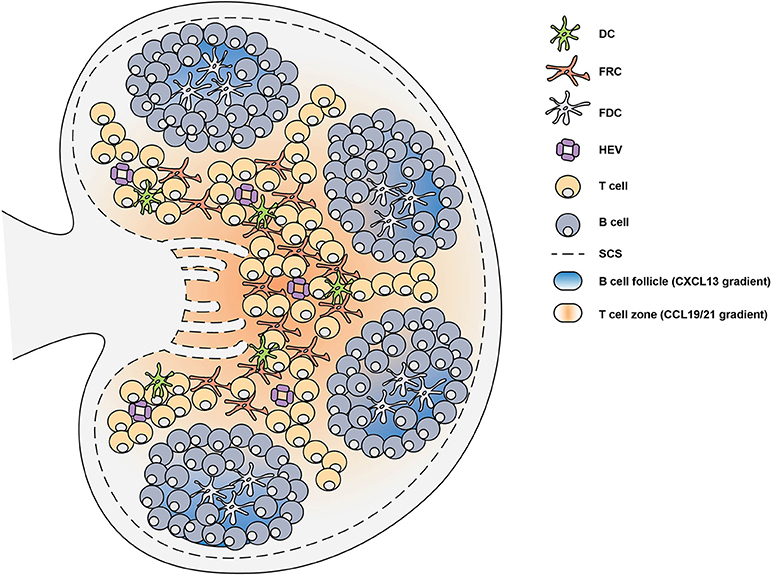
In your Blood lab please do the following , All drawings should be done in a circle and use a petri dish to draw the circle.
1. Draw a clear, colour drawing of a human blood smear on high power. Label the cells that you find, including erythrocytes, and WBCs such as lymphocytes, monocytes, neutrophils, eosinophils.
2. Draw a clear, colour drawing of a slide of a lymph node and label whatever structures you can. Draw this under low and medium power.
3. Copy this cartoon of the lymph node to familiarize yourself with where the cells are.
-1.jpg)
"Cross-section of a lymph node with sections labelled.1) Capsule; 2) Subcapsular sinus; 3) Germinal center; 4) Lymphoid nodule; 5) Trabeculae"
copyright Benutzer:Gleiberg
Thursday, 27 November 2025
Mitosis and meiosis lesson notes and questions
Although you studied mitosis and meiosis in the past, it is worth a look again to make sure you have all the steps down correctly. It will help you to understand our next unit which is Genetics. This video explains how alleles are connected to the steps of mitosis and meiosis. I also assume this is familiar from last year.
Your teacher will review these steps, explaining some of the complex parts and give you time to answer the questions. Next, your teacher will review the answers to the questions. After this you will do a creative assignment to demonstrate that you understand this material.
Please watch this videoAnswer the following questions on your own paper and hand this in.
Answer in full sentences and draw your answers. Draw in ink or photograph a model using lego, string or other material
1. What is Chromatin? How many strands are there in a human?
2. How many chromatids are there in a human?
3. What is the 2n or diploid number?
4. What is mitosis used for?
5. What is meiosis used for?
6. Define "Gamete"
7. What is the Haploid number?
8. What organ makes sperm, what makes egg?
9. How many chromatids are in a sperm or egg?
10 Draw a fertilization
11. Draw how sperm cells are made using the number 46 to represent the chromatid number.
12. Draw and label Chromatin, Chromatid, Sister chromatids, Chromosome. And show me a homologous chromosome
13. Draw a mitosis with 2n= 6. Label the stages in detail. Remember to draw Interphase and show chromatins.
14. Draw a meiois with 2n=6. Label the stages.
Again, draw interphase and show the chromatin.
15a. Why does crossing over happen during prophase I?
15b. What is primary nondisjunction. What can happen to the chromatid number?
1. What is Chromatin? How many strands are there in a human?
2. How many chromatids are there in a human?
3. What is the 2n or diploid number?
4. What is mitosis used for?
5. What is meiosis used for?
6. Define "Gamete"
7. What is the Haploid number?
8. What organ makes sperm, what makes egg?
9. How many chromatids are in a sperm or egg?
10 Draw a fertilization
11. Draw how sperm cells are made using the number 46 to represent the chromatid number.
12. Draw and label Chromatin, Chromatid, Sister chromatids, Chromosome. And show me a homologous chromosome
13. Draw a mitosis with 2n= 6. Label the stages in detail. Remember to draw Interphase and show chromatins.
14. Draw a meiois with 2n=6. Label the stages.
Again, draw interphase and show the chromatin.
15a. Why does crossing over happen during prophase I?
15b. What is primary nondisjunction. What can happen to the chromatid number?
Tuesday, 18 November 2025
immune system topics for quick poster presentation
1. Alaskan Serum relay of 1925, the story of Togo and Balto
2. Influenza: H3N2 subclade K flu, Avian Flu H5N1
3. TB
4. Measles
5. Meat allergy alpha gal case
6. HPV and cervical cancer
7. Mpox clade 1 &2
8. Tetanus ER protocols and the story of the boy in 2017 in Oregon who was not immunized against Tetanus
9. Meningitis B in Nova Scotia: The story of Kai
The Immune System Study Questions
We reviewed the immune system in class.
1. The immune system can be divided into SPECIFIC responses and NONSPECIFIC responses.
a. What are the two kinds of specific responses and what cells are involved?
b. What are the two kinds of nonspecific responses?
2. For barriers, describe the kinds of barriers that are in the
a. respiratory system
b. digestive system
c. reproductive system
d. skin
3. The inflammatory response happens when there is a break in the barrier. List all the steps of the inflammation response, including all the cells that are involved and the cell communication that takes place.
4. Is inflammation LOCAL , happening in a specific place, or is it SYSTEMIC, happening all over the body?
5. Describe the following cases where the inflammatory response is not working properly. What is the cause, the symptoms and the treatment?
a. allergy to a food item
b. sepsis
6. What are the two kinds of SPECIFIC IMMUNITY and what cells are involved ?
7. What is a major histocompatibility complex and how does it help protect the body?
8. Describe the steps of the humeral response.
9. describe the steps of the cell mediated response.
10 How does a T-cell get trained to do its job properly and to not attack the body?
11. Give some examples of "autoimmune" diseases.
Thursday, 6 November 2025
Fetal circulation
Click on the picture below to play the video

Today we explored fetal circulation. First we drew our conception of how fetal circulation might occur. Next we compared fetal and baby circulation in depth in the table below. Finally we drew a schematic diagram to compare the two and listened to a baby cry because the newborn's first breath is when the ductus arterioles and the foramen ovale closes successfully


BLOOD PRESSURE
The Major Blood Vessels. DIAGRAM


Wednesday, 5 November 2025
Heart Dissection
Have a look at the gross anatomy of the mammalian heart
You will receive your heart and orient it with the ventral face up and dorsal face down. Review the
Monday, 3 November 2025
PATH OF BLOOD
Today we will introduce you to the Circulation System.
This is the slideshow
You will receive a gigantic DIAGRAM on circulation
and we will explore the path of blood . In particular, we will replicate William Harvey's experiment demonstrating that veins move only in one direction.
also this is the major vessels that come out of the AORTIC ARCH
Read the Summary notes on circulation:
Circulation System.
Major Blood Vessels
Lymphatic System link here
Wednesday, 29 October 2025
The Heartbeat, Action potential and the Cardiac conduction system
You have some fill in notes
And their answer key to look at
click on the video below to observe a beating heart. NOTE which valves shut during the lub, dub sound and observe whether the heart is contracting or relaxing during the heart sounds. Slow down the video of you have to

ADVANCED LEARNING: ACTION POTENTIAL AND VECTORS:
If you are interested in a more advanced understanding of the cardiac conduction system, this website is an excellent source that goes into detail on resting potential and action potential in myocytes. Here is a very advanced tutorial on electrical vectors of the heart
Tuesday, 28 October 2025
Problem based activity
update:
patient bloodwork is available here and their ECG results are here for the bloodwork, the first number is the patient's result. The second number is the normal range and the third column shows units
You may approach the patients during FIT time and some , not all are available during our class time. Many are not available during lunch. You have until the end of the week to solve this problem.
Disease Activity 2025 STUDENT HANDOUT
The powerpoint introducing this activity is on TEAMS
Name/s _______________________________________________________ block ______________________
Patient HISTORY :
WHAT IS THE NAME OF YOUR PATIENT? WHAT IS THEIR BACKGROUND? TELL ME SOME THINGS ABOUT THEM THAT ARE NOT MENTIONED IN THE BIOGRAPHIES
patient Symptoms
1. Observe any physical and emotional symptoms of your patient. What are the symptoms that you observe? Are they experiencing discomfort or pain anywhere? Do they have pain in the belly or the head etc?
2. Ask your patients some questions and record their responses . Examples of questions:
Do they have any of these symptoms: fever, chills, shortness of breath, nausea, headache, chest pain, runny nose, cough, productive cough? (with phlegm) . Do they have a sense of fullness, pain anywhere in the head, ear, throat? Have they ever been exposed to people who are sick? Do they have, contact with environmental pollution like coal dust, asbestos or any other substance? . Do they smoke? What is their overall mood? Do they have any gastrointestinal symptoms? Ask if they have been swabbed for bacterial infection.
- Give your patient a physical exam. Ask them to open their mouth to say AAAHH. Ask to look into their ear. Using your stethoscope, Listen for lung sounds on their back. What do you hear?
https://depts.washington.edu/physdx/pulmonary/tech.html
Do they have any copies of their imaging such as an X-ray?
- List three conditions that can possibly match what you observe: What evidence do you have for your conclusions.
- What possible laboratory tests might need to be ordered to confirm your diagnosis? Did they get any diagnostics done? Blood pressure, chest x-ray, a bacterial culture?
Their bloodwork and any other test results will be given to you at a later time.
- What does the blood agar swab tell you?
7. Would you suggest that this patient follow up with a medical doctor? Why or why not? What tests do you think their doctor will order to confirm your hypothesis.
ASSIGNMENT. 72 marks total
Answer all the questions and write a report due at the end of the activity . Your report must show that yoi use EVIDENCE TO COME TO YOUR CONCLUSIONS and you communicate that evidence clearly out of 60 marks
You can also post pictures of interviewing patients on the class observation site with the full names of your group. Remember to ask before taking a picture of anyone
You managed to interview and write observations on all 12 patients out of 12 marks.
Monday, 20 October 2025
Lung Diseases
Make some 2 column notes on the following resources. I will be adding to these resources as time goes by.
READ ABOUT these Lung Diseases
as well as ones that are listed by the Canadian Lung association
Read about how health care workers examine lung sounds :
https://depts.washington.edu/physdx/pulmonary/tech.html
Have a look at Radiology samples:
Normal chest x-ray
https://radiologyassistant.nl/chest/chest-x-ray/basic-interpretation
Chest x-rays that show diseases
https://radiologyassistant.nl/chest/chest-x-ray/lung-disease
Subscribe to:
Posts (Atom)